intersection
|
1 min read
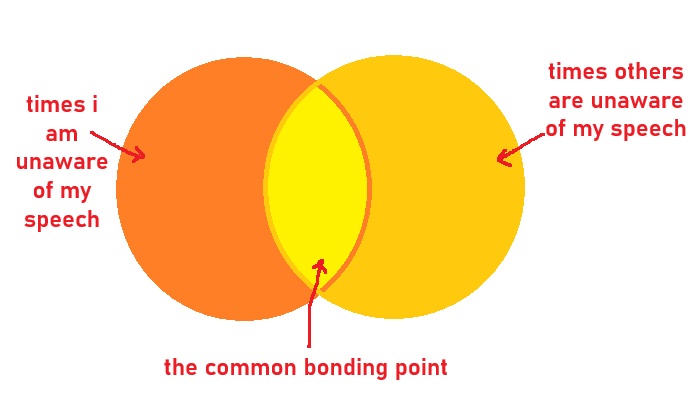
sometimes, i don't know what i am talking about (A). other times, people don't know what i am talking about (B). we bond over the shared confusion my speech instills. here's the venn diagram version:
(A ∪ B) + (A ∩ B) ?= A + B
most of our conversations happen in the area the diagram forgot to label.
- times we both know what i am talking about is rare, fragile, and can often be ruined by overexplaining.
- times i know what i am talking about but they don’t is scary. misunderstandings are bad.
- times they know what i am talking about but i don’t produces confidence in the wrong direction.
- times i know what they are talking about is where the polite nodding lives.
- times i know what i am talking about and they know what they are talking about does not guarantee mutual understanding. two people can know things perfectly and still talk past each other.
- times at least one of us knows what they are talking about is where most conversations live. union is generous. union is optimistic. union is how conversations continue.
- times they know what they’re talking about but i don’t is when i leave knowing less than when i entered.
- when neither of us knows what we’re talking about, nobody pretends and confusion feels warm.
the most stable conversations are not the clearest ones, but the ones where ignorance overlaps politely. conversation isn’t the intersection of what we know — it’s the union of what we’re willing to stay for.